
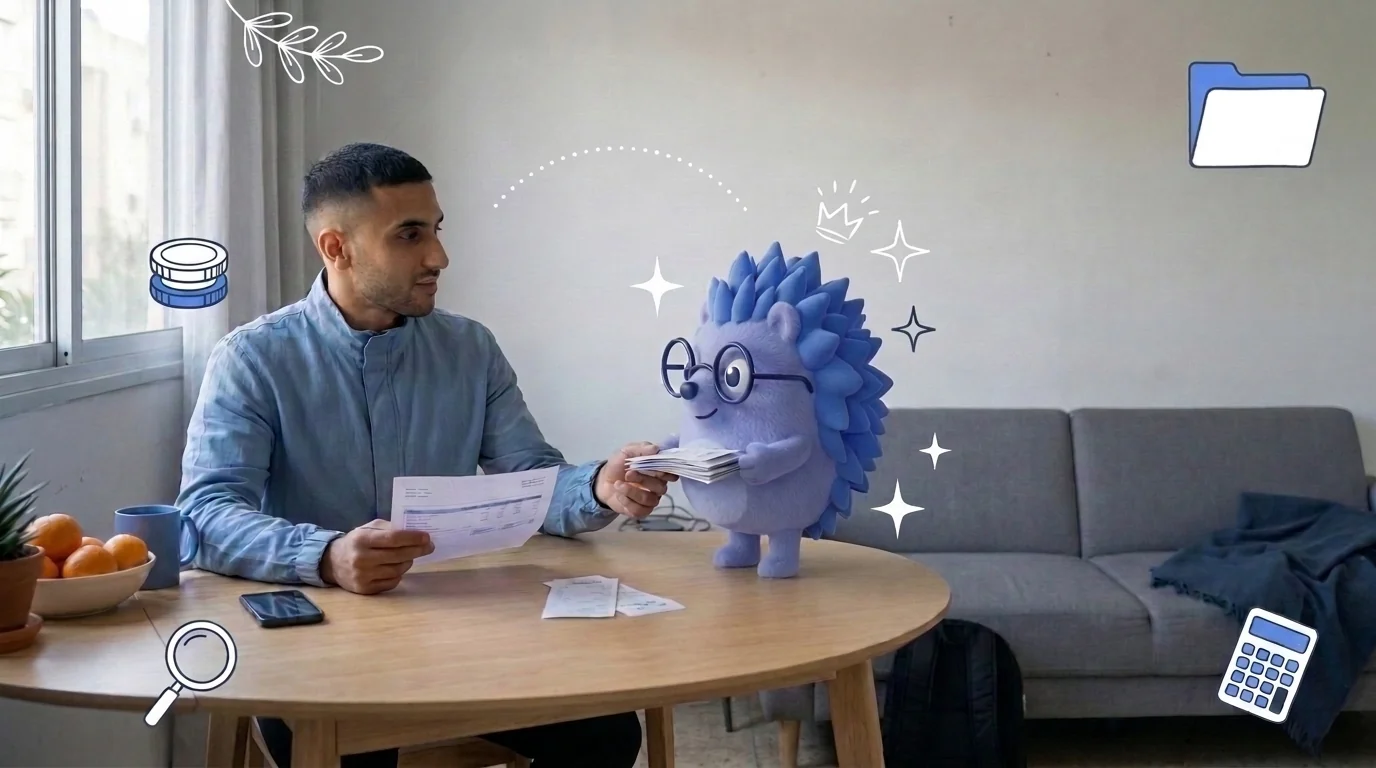
You have a steady job, a salary that arrives on time and a business idea you cannot stop thinking about? The good news is that you do not have to resign to start working as a self-employed person. You can keep receiving a payslip and run a business at the same time, issue receipts and build a second source of income. But from the moment you start earning as a self-employed person too, the way you deal with the authorities changes. Suddenly you need to understand what to do about Income Tax, who pays Bituach Leumi (National Insurance) and how to report both incomes. So where do you start, and how do you manage it all without getting tangled up? Here is what you need to know.
Key Takeaways
- You can be salaried and self-employed at the same time. You do not have to leave your job to open a business, but check your employment terms and your obligations to your employer.
- Even a business that runs only a few hours a week has to be registered as VAT, Income Tax and Bituach Leumi require.
- Income Tax is calculated on all of your income, so your salary and your business profit are counted together in the annual tax calculation.
- Bituach Leumi contributions deducted from your salary do not necessarily cancel the duty to pay on your self-employed income.
- Recording income, keeping expense documents and checking your reporting duties matter even when the business is only a second source of income.
Can You Be Salaried and Self-Employed at the Same Time?
Yes. The law allows you to work as an employee and run a self-employed business at the same time. For many people it is a way to test a business idea without giving up the financial security of a regular salary straight away.
Before you start, though, read your employment contract. Some employers restrict additional work, activity with competitors, or the use of the company's information and resources.
It is also important to understand that business income is not part of your salary. For the authorities it is a separate activity that requires registration, record-keeping and reporting as the law requires.
How Do You Open a Business While Staying Employed?
Opening the business works the same way as for any new self-employed person, even if you keep a full-time job. Before you start, estimate the income you expect from the business and choose the right type of business file. If you plan a small business and your expected annual turnover does not exceed the legal ceiling (122,833 NIS a year, as of 2026), you may be able to start by opening an Osek Patur. This option is for people who meet the conditions, including the type of occupation.
If your turnover is expected to exceed the ceiling, or your profession must be registered as an Osek Murshe, act accordingly. In that case you can go ahead with opening an Osek Murshe and start dealing with the authorities under the duties that apply to your business.
Once you have chosen the type of business, open the files and report the activity to Income Tax, VAT and Bituach Leumi. If you prefer not to deal with the authorities yourself, you can use a representation service before the tax authorities: an accountant receives a power of attorney and handles the routine matters with Income Tax, VAT and Bituach Leumi, such as reports, payments and replies to the authorities' requests. At Keep, this service is part of the recommended plan.
Then make sure the files were opened with Income Tax and that the activity was reported to Bituach Leumi. In some cases you can register online; in others you can use a professional representative. An Osek Patur, for example, opens the VAT and Income Tax files in one online application on the Tax Authority website, and can tick an option there to open a Bituach Leumi file too. Anyone who did not tick it registers with Bituach Leumi separately, on Form 6101.
| Topic | As an employee | As self-employed |
|---|---|---|
| Income Tax | Deducted from the payslip | Advances or a reporting arrangement, depending on the type of file |
| Bituach Leumi | Deducted from the salary | Paid according to income and how the activity is classified |
| Reporting income | The employer reports | The business owner's responsibility |
| Accounting documents | Payslip | Receipts, invoices and records, depending on the type of business |
| Pension | Contributions through the workplace | Check whether an additional deposit is required |
How Is Income Tax Calculated When You Have a Salary and a Business?
One of the most important questions is how tax is calculated when you have two sources of income.
Income Tax is calculated on a person's annual taxable income. This means the business profit is added to the taxable income from your salary for the tax calculation, after the relevant deductions and adjustments.
For example, an employee who earns 12,000 NIS a month and makes a taxable business profit of 3,000 NIS a month has to take both incomes into account. The tax on the business profit is not necessarily calculated as if it were their only income. Under the 2026 tax brackets, a salary of 144,000 NIS a year is already in the 20% bracket, so the business profit of 36,000 NIS a year is also taxed at a marginal rate of 20%, not at the 10% rate the first bracket starts with. The example is for illustration only, before credit points, deductions and Bituach Leumi contributions.
It is also important to tell tax coordination (teum mas) apart from the annual report. An employee with a regular business usually does not need tax coordination between the salary and the business income; they file an annual report that includes the income from both sources. Micro-business owners (Osek Zair) have different reporting rules: someone who does tax coordination during the year files a shortened report after it, and someone who has not done it by the end of the tax year files a full annual report.
One condition matters especially to employees: if part of the business income comes from your current employer, you cannot join the micro-business track. We cover the differences between the tracks in Osek Zair or Osek Patur.
What About Bituach Leumi and Your Pension?
Even if you pay Bituach Leumi through your payslip, you may have to pay more on your self-employed income. The calculation depends on your income as an employee, your business income and how Bituach Leumi classifies the activity. There is a difference between someone who meets the definition of a self-employed person and someone whose activity is below the set conditions.
As of 2026, Bituach Leumi treats you as self-employed if you meet one of three conditions: you work in the business at least 20 hours a week on average; or your monthly business income is at least 6,885 NIS; or you work at least 12 hours a week and your monthly income is at least 2,065 NIS. If you meet none of them, you pay contributions on the business income under a different rate table. Either way, you notify Bituach Leumi when you start the self-employed activity.
Check your pension deposit duty as well. If the contributions made through your job (your employer's and yours) are lower than the amount you would have to deposit as a self-employed person, you must top up the difference, and only up to that amount. The duty applies to self-employed people aged 21 to 60 who have been registered with VAT for at least 6 months.
So even while the business is still small, check your obligations at the start rather than waiting for the end of the year.
How Do You Run a Second Business Without Getting Tangled in Reports?
One of the challenges of combining a job with self-employed work is the time it takes to run the business. After a full workday, you do not always feel like dealing with receipts, payments and tracking expenses too. Stick to three things: issue accounting documents that match your type of business, keep proof of your business expenses, and track the money coming in and going out.
An online accountant service can suit people who prefer to handle their accounting remotely, send documents digitally and get professional support on reporting and tax. At Keep, a personal accountant supports the business in the recommended plan.
Check what the service actually includes: whether it handles the annual reports and representation before the authorities, and what the business owner still has to do.
Which Mistakes Should You Avoid at the Start?
A common mistake is thinking the business is too small to report. Even a small-scale activity may require registration and reporting. Another mistake is treating all the money you receive from clients as free profit. You need to account for expenses, taxes and other payments that may be required later.
Also avoid mixing your employment documents with your business documents, and do not assume that every private expense can count as a recognised business expense.
Summary: You Can Be Salaried and Self-Employed, as Long as You Manage It Properly
Opening a business alongside a salaried job lets you build a second source of income without giving up your job straight away. Alongside the advantages, know your registration, tax and reporting duties and understand how the two incomes affect each other. Keep offers self-employed people a digital system for managing income, expenses and documents, and in the recommended plan also a personal accountant and representation before the tax authorities. That way you can keep your accounting in one place and spend more time growing the business.
Frequently Asked Questions About Combining a Job and Self-Employment
Do I have to tell my employer that I opened a business?
There is no general duty to notify your employer in every case, but check your employment contract, your workplace's rules and your duties of loyalty and confidentiality. If you have committed to getting approval for additional work, follow the terms that apply.
Do I pay Income Tax twice if I am both salaried and self-employed?
No, the same income is not taxed twice. Income Tax is calculated on all of your taxable income for the year. The tax deducted from your salary and the payments made for the business are taken into account in the final tax calculation.
Can I open a business if it only earns a few hundred shekels a month?
Yes. Even a business with low income can be a self-employed activity that requires registration and reporting. Your Bituach Leumi payment duties and classification depend on the circumstances, your income and your working hours.
How can Keep help employees who open a business?
Keep offers file opening with the authorities, a system for managing income and expenses, and in the recommended plan also a personal accountant. The service can help you deal with the authorities and with your business's accounting duties, depending on the plan you choose.